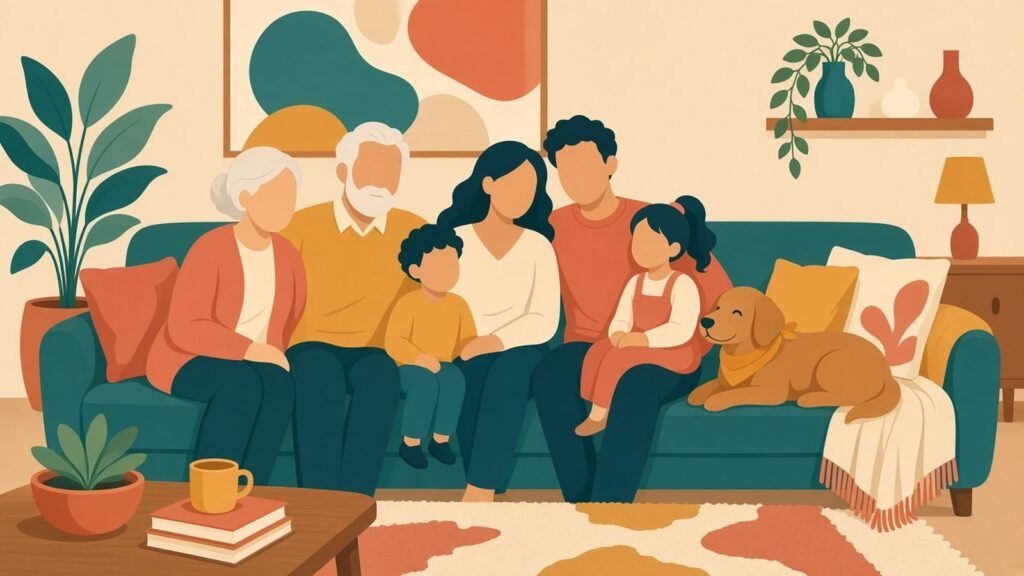
“Do you have siblings?” is one of the first questions people ask when they get to know you, and it comes up in almost every beginner class and in the Goethe A1 speaking test. German family vocabulary is a quick win: many words look like English (Mutter, Vater, Bruder), and the rest follow clear patterns.
Below you’ll find the core family words with their articles and plurals, the extended family, in-laws, and the sentences you need to talk about your own family.
The immediate family
Always learn a noun with its article. The gender here mostly matches the person’s gender, which makes these some of the easiest nouns in German. The big exception is das Kind, which is neuter.
| German | Plural | English |
|---|---|---|
| die Familie | die Familien | family |
| die Eltern | (plural only) | parents |
| der Vater | die Väter | father |
| die Mutter | die Mütter | mother |
| das Kind | die Kinder | child |
| der Sohn | die Söhne | son |
| die Tochter | die Töchter | daughter |
| der Bruder | die Brüder | brother |
| die Schwester | die Schwestern | sister |
| die Geschwister | (plural) | siblings |
| das Baby | die Babys | baby |
In everyday speech, you’ll hear Mama and Papa all the time, from adults too. Mutti and Vati exist but sound a bit old-fashioned.
Geschwister is used much more than English “siblings,” which can sound a bit formal. Hast du Geschwister? is simply the normal way to ask “Do you have any brothers or sisters?”
Grandparents and grandchildren
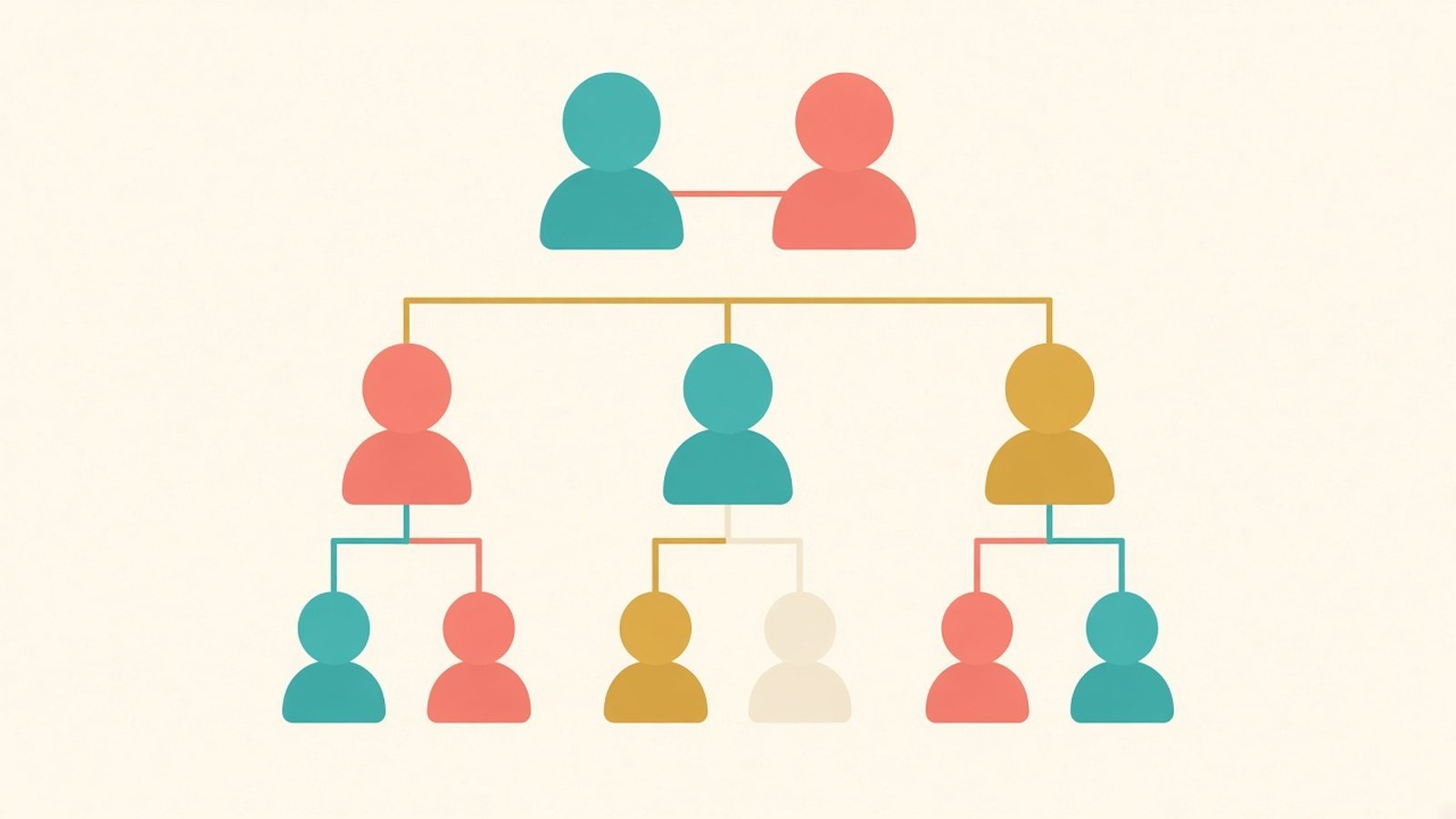
Add Groß- for grandparents and Enkel- for grandchildren.
| German | English |
|---|---|
| die Großeltern | grandparents |
| der Großvater / der Opa | grandfather / grandpa |
| die Großmutter / die Oma | grandmother / grandma |
| das Enkelkind | grandchild |
| der Enkel | grandson |
| die Enkelin | granddaughter |
| der Urgroßvater / die Urgroßmutter | great-grandfather / great-grandmother |
Notice the -in ending in Enkelin. It turns many masculine nouns into feminine ones, and you’ll see it again with Partnerin and Schwägerin further down.
Aunts, uncles and cousins
| German | English |
|---|---|
| der Onkel | uncle |
| die Tante | aunt |
| der Cousin | cousin (male) |
| die Cousine | cousin (female) |
| der Neffe | nephew |
| die Nichte | niece |
| die Verwandten | relatives |
Cousin and Cousine come from French, so they’re pronounced roughly “koo-ZANG” and “koo-ZEE-nuh.” You may also see the older words der Vetter and die Base in books, but they’re rarely used today.
Partners, in-laws and modern families
| German | English |
|---|---|
| der Mann / der Ehemann | husband |
| die Frau / die Ehefrau | wife |
| der Partner / die Partnerin | partner |
| der Freund / die Freundin | boyfriend / girlfriend (also: friend) |
| der Schwiegervater / die Schwiegermutter | father-in-law / mother-in-law |
| die Schwiegereltern | parents-in-law |
| der Schwager / die Schwägerin | brother-in-law / sister-in-law |
| der Stiefvater / die Stiefmutter | stepfather / stepmother |
| der Halbbruder / die Halbschwester | half-brother / half-sister |
Two words need care. Mein Mann and meine Frau are the normal way to say “my husband” and “my wife,” even though Mann and Frau also mean “man” and “woman.” And meine Freundin usually means “my girlfriend.” To make clear she’s just a friend, say eine Freundin von mir (a friend of mine).
Talking about your family
Possessives: mein, meine, dein, deine
Use mein with masculine and neuter nouns and meine with feminine and plural nouns: mein Bruder, mein Kind, meine Schwester, meine Eltern. Our guide to German possessive pronouns covers sein, ihr and the others.
haben + accusative
Haben takes the accusative, so masculine nouns change: ein becomes einen. Feminine and neuter nouns stay the same.
- Ich habe einen Bruder. (I have a brother.)
- Ich habe eine Schwester. (I have a sister.)
- Ich habe ein Kind. (I have one child.)
- Ich habe zwei Söhne. (I have two sons.)
- Ich habe keine Geschwister. Ich bin Einzelkind. (I don’t have any siblings. I’m an only child.)
If the accusative still feels shaky, read our post on the accusative case in German.
Useful sentences
- Meine Familie ist groß / klein. (My family is big / small.)
- Mein Bruder ist älter / jünger als ich. (My brother is older / younger than me.)
- Meine Eltern wohnen in Kolkata. (My parents live in Kolkata.)
- Ich bin verheiratet / ledig / geschieden. (I’m married / single / divorced.)
- Meine Tochter ist acht Jahre alt. (My daughter is eight years old.)
- Wir sehen uns jedes Wochenende. (We see each other every weekend.)
Describing family members
Once you can name your relatives, you’ll want to say something about them. A few adjectives go a long way:
| German | English |
|---|---|
| alt / jung | old / young |
| älter / jünger | older / younger |
| verheiratet | married |
| nett / lustig | nice / funny |
| streng | strict |
| der / die Älteste | the oldest one |
| der / die Jüngste | the youngest one |
- Meine Oma ist sehr lustig. (My grandma is really funny.)
- Ich bin der Älteste. (I’m the oldest, said by a man or boy.) A woman says Ich bin die Älteste.
- Mein Onkel arbeitet als Lehrer. (My uncle works as a teacher.)
To say someone’s age, use sein and Jahre alt: Mein Vater ist 62 Jahre alt. Practice saying the numbers aloud, because German puts the ones before the tens (zweiundsechzig, “two and sixty”). Our post on German numbers explains the pattern.
A short dialogue
A: Hast du Geschwister?
B: Ja, ich habe einen Bruder und eine Schwester. Mein Bruder wohnt in Hamburg und meine Schwester studiert in Wien. Und du?
A: Ich bin Einzelkind, aber ich habe viele Cousins und Cousinen.
(A: Do you have siblings? B: Yes, I have a brother and a sister. My brother lives in Hamburg and my sister is studying in Vienna. And you? A: I’m an only child, but I have lots of cousins.)
Questions like these show up whenever you introduce yourself in German, so it’s worth having two or three sentences about your family ready to go.
Key takeaways
- Learn each family word with its article and plural, for example der Bruder, die Brüder.
- Das Kind is neuter, and die Eltern and die Geschwister are plural.
- Add Groß- for grandparents, Enkel- for grandchildren and Schwieger- for in-laws.
- After haben, masculine nouns take einen: Ich habe einen Sohn.
- Mein Mann and meine Frau mean “my husband” and “my wife.”
FAQ
How do you say “my family” in German?
Meine Familie. Familie is feminine, so it takes meine. The stress is on the second syllable: fa-MEE-lee-eh.
What is the German word for siblings?
Die Geschwister. It’s plural, so you ask Hast du Geschwister? and answer Ja, ich habe zwei Geschwister or Nein, ich habe keine Geschwister.
Do Germans say Oma and Opa?
Yes, all the time. Oma and Opa are the normal everyday words. Großmutter and Großvater are used more in writing or formal situations.