A1 Phrase
“Merry Christmas” in German is Frohe Weihnachten, and from late November you’ll see it on every shop window, card and market stall in Germany, Austria and Switzerland. In this short lesson you’ll learn how to pronounce it, the alternatives Germans use with friends and at work, ready-to-copy card messages, and the regional greetings you’ll hear in Austria and Switzerland.
Quick answer
Merry Christmas in German is Frohe Weihnachten (Frohe Weihnachten). Other common greetings: Frohes Fest (happy holidays, casual), Fröhliche Weihnachten (traditional) and Schöne Feiertage (happy holidays, neutral and good for work). Reply with Danke, dir auch! or, formally, Danke, Ihnen auch!
How to Pronounce Frohe Weihnachten
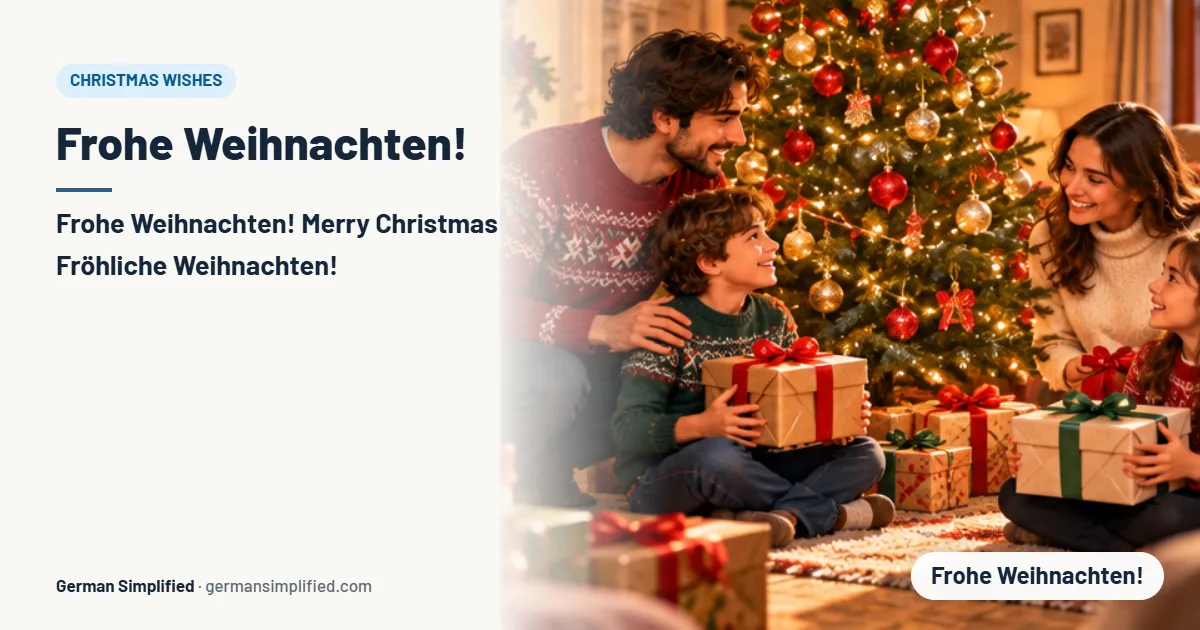
It sounds roughly like “FRO-uh VY-nakh-ten”.
- Frohe: a long “o” and a soft “uh” at the end. The h is silent.
- Weih-: German w is an English “v”, and ei sounds like “eye”. So: “vy”.
- -nachten: the ch after a is the throaty sound in Scottish loch, not a “k”.
Listen and repeat: Frohe Weihnachten · Weihnachten · Frohes Fest
Why “Frohe” and not “Froher”? Weihnachten behaves like a plural in this greeting, so the adjective ends in -e. Just learn the whole phrase as one block.
Alternatives
Here’s how the most common Christmas greetings compare:
| German | English | Formality |
|---|---|---|
| Ich wünsche Ihnen frohe Weihnachten. | I wish you a merry Christmas. | ●●●●● formal |
| Schöne Feiertage! | Happy holidays! | ●●●●○ neutral, good for work |
| Besinnliche Weihnachten! | A peaceful, reflective Christmas! | ●●●●○ warm and thoughtful |
| Frohe Weihnachten! | Merry Christmas! | ●●●○○ works everywhere |
| Fröhliche Weihnachten! | Merry Christmas! | ●●●○○ traditional, as in songs |
| Frohes Fest! | Happy holidays! (lit. happy feast) | ●●○○○ casual and very common |
| Frohe Weihnachten und einen guten Rutsch! | Merry Christmas and a happy New Year! | ●●○○○ friendly, late December |
Careful: “Schöne Bescherung!”
Die Bescherung is the moment presents are given out on Christmas Eve. But Schöne Bescherung! is also an ironic expression meaning “What a mess!”. Use it as a greeting only with people who know you’re joking.
Christmas Card Messages
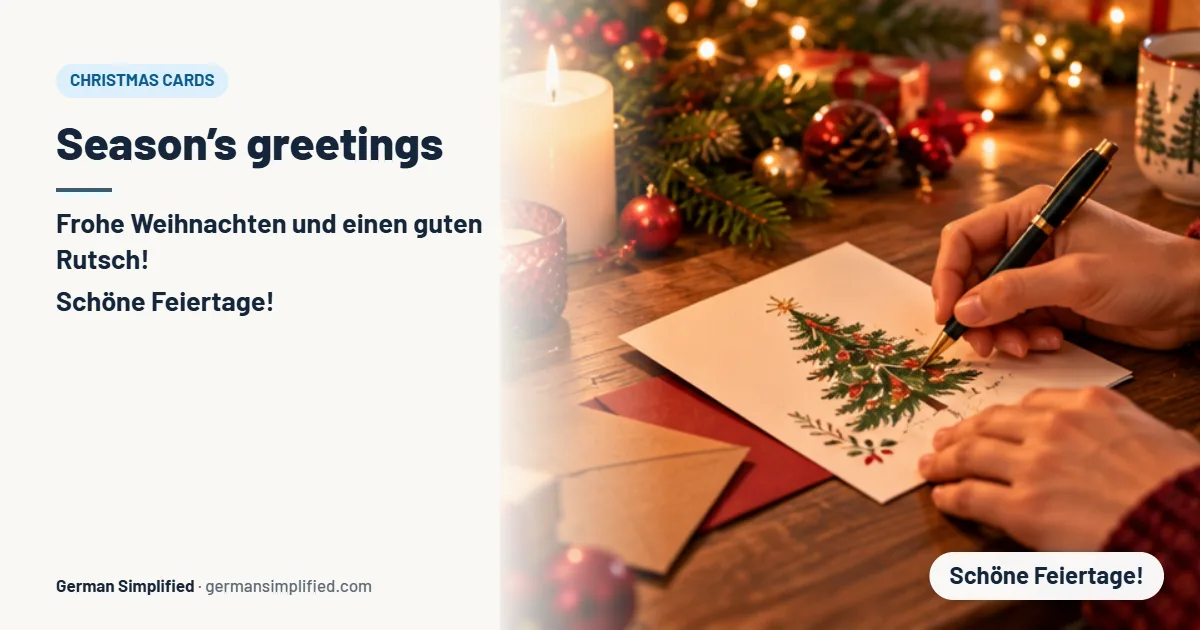
A German Christmas card starts with Liebe (to a woman or several people) or Lieber (to a man), has one or two lines of wishes, and ends with Liebe Grüße or Herzliche Grüße. Copy any of these:
- Frohe Weihnachten und ein gutes neues Jahr! (Merry Christmas and a happy New Year!)
- Ich wünsche dir wunderschöne Weihnachten! (I wish you a wonderful Christmas!)
- Genieß die Feiertage mit deinen Liebsten. (Enjoy the holidays with your loved ones.)
- Frohe Weihnachten! Ich freue mich, dich bald wiederzusehen. (Merry Christmas! I’m looking forward to seeing you again soon.)
- Ein frohes Fest und viel Glück, Gesundheit und Freude im neuen Jahr! (Happy holidays and lots of luck, health and joy in the new year!)
Liebe Sarah,
frohe Weihnachten und ein gutes neues Jahr! Genieß die Feiertage mit deiner Familie.
Liebe Grüße
TomDear Sarah, Merry Christmas and a happy New Year! Enjoy the holidays with your family. Love, Tom
Why a handwritten card works so well
Writing a phrase by hand, for a real person, ties it to a meaningful moment. That emotional link makes the phrase much easier to remember. Write one German card this year and you’ll probably never forget Frohe Weihnachten und ein gutes neues Jahr.
Christmas Greetings for Work
At work, stay with Sie unless you already use du with your colleagues, and choose neutral phrases like Schöne Feiertage:
- Email closing: Ich wünsche Ihnen schöne Feiertage und einen guten Start ins neue Jahr. (I wish you happy holidays and a good start to the new year.)
- To clients: Wir bedanken uns für die gute Zusammenarbeit und wünschen Ihnen frohe Weihnachten. (Thank you for the good cooperation; we wish you a merry Christmas.)
- Leaving the office for the break: Schöne Feiertage, bis nächstes Jahr! (Happy holidays, see you next year!)
Tip: If you’re writing an email in German, end with Mit freundlichen Grüßen (formal) or Viele Grüße (friendly). Both use the letter ß: see the German ß (Eszett).
Regional Greetings (Austria, Switzerland)
| Where | Greeting | Note |
|---|---|---|
| Germany | Frohe Weihnachten / Frohes Fest | Standard everywhere |
| Austria | Frohe Weihnachten / Gesegnete Weihnachten | Gesegnete (blessed) is popular in Austria and Bavaria |
| Bavaria | Frohe Weihnacht / Fröhliche Weihnacht | Often without the final -en |
| Switzerland | Schöni Wiehnachte / Frohi Wiehnacht | Swiss German; in writing, Swiss people use standard Frohe Weihnachten |
In the south, Austria and much of Switzerland, presents traditionally come from das Christkind rather than der Weihnachtsmann. Learn more festive words in German Christmas words.
FAQs
How do you say Merry Christmas in German?
Frohe Weihnachten. Fröhliche Weihnachten and Frohes Fest are common alternatives.
What is the difference between Frohe Weihnachten and Fröhliche Weihnachten?
None in meaning. Fröhliche Weihnachten sounds a little more traditional and appears in songs like “O du fröhliche”; Frohe Weihnachten is more common in everyday use.
How do you reply to Frohe Weihnachten?
Danke, dir auch! (informal) or Danke, Ihnen auch! (formal). Gleichfalls (likewise) also works.
What do Germans say for Happy Holidays?
Schöne Feiertage or Frohes Fest. Schöne Feiertage is neutral and ideal at work.
When do Germans say Merry Christmas?
Mainly in the days before Christmas and on 24–26 December. From about the 27th, people switch to Guten Rutsch (happy New Year).
Conclusion
Frohe Weihnachten is the greeting you need. Add Frohes Fest for friends, Schöne Feiertage for work, and a short card message ending in Liebe Grüße, and you’re ready for the holidays in any German-speaking country. For more everyday expressions, visit the German phrases guide or build your festive word bank in the vocabulary hub.
Sources and further reading: DWDS: Weihnachten and Duden: Bescherung.
Keep learning → Christmas words in German: vocabulary for the holidays